Managing guest inquiries through Facebook Messenger presents an operational challenge for small lodging operators and independent front-desk teams. Travelers may use social media while comparing upcoming stays, asking for dining recommendations, or checking property amenities. However, a small hotel rarely has the capacity to maintain a dedicated social media desk. When the front desk is busy checking in guests, answering the telephone, and handling on-property requests, Messenger notifications can sit unanswered. A clear response process helps the team identify useful booking conversations without promising an instant reply.
A practical pre-arrival inquiry workflow can triage incoming messages, surface stable questions, identify potential booking or accessibility needs, and route urgent or property-specific questions to on-site staff. It should also set clear limits on collecting payment details, identification documents, or sensitive health and accessibility information in chat. Organizing inquiries helps front-desk teams spend their limited time on conversations requiring hospitality knowledge and human judgment.
The Principles of Safe Messenger Triage
Before implementing any communication workflow, small lodging operators should define what information may be handled through messaging. Keep payment card details, passport or government ID numbers, specific health conditions, and sensitive accessibility details out of routine chat. If a guest requires specialized accommodations or needs to guarantee a room with a credit card, route them to the property’s approved booking or staff-assisted process. Operators should align the workflow with their own policies and applicable professional advice.
Guest Question Triage Categorization
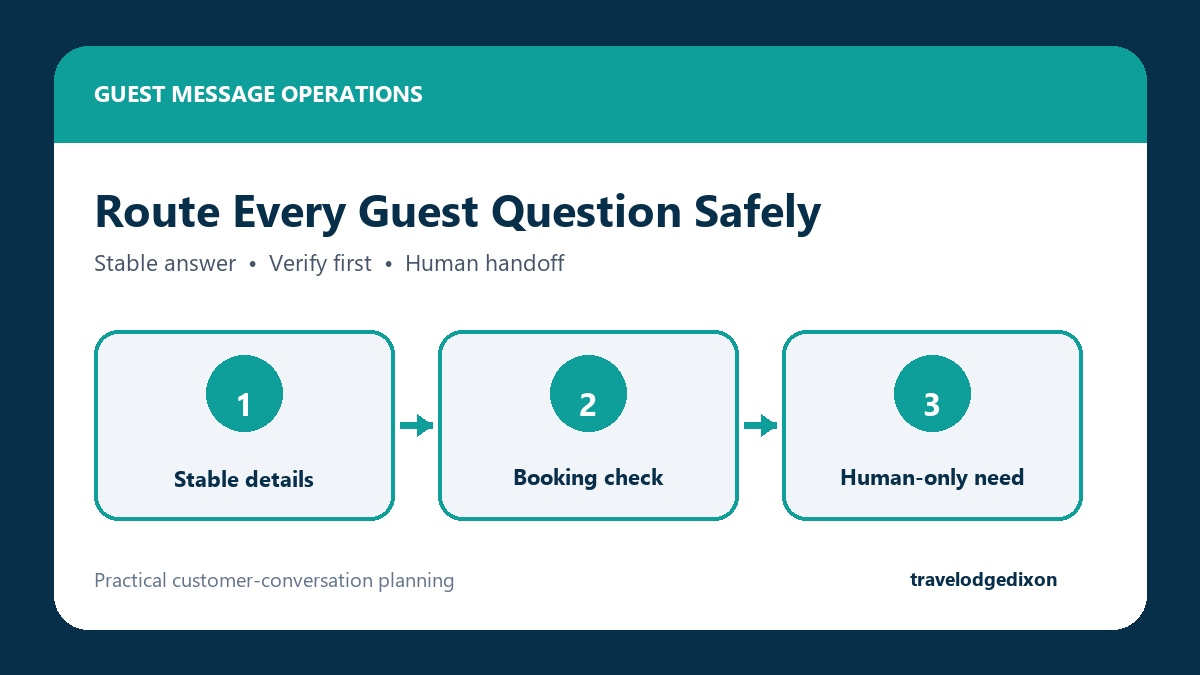
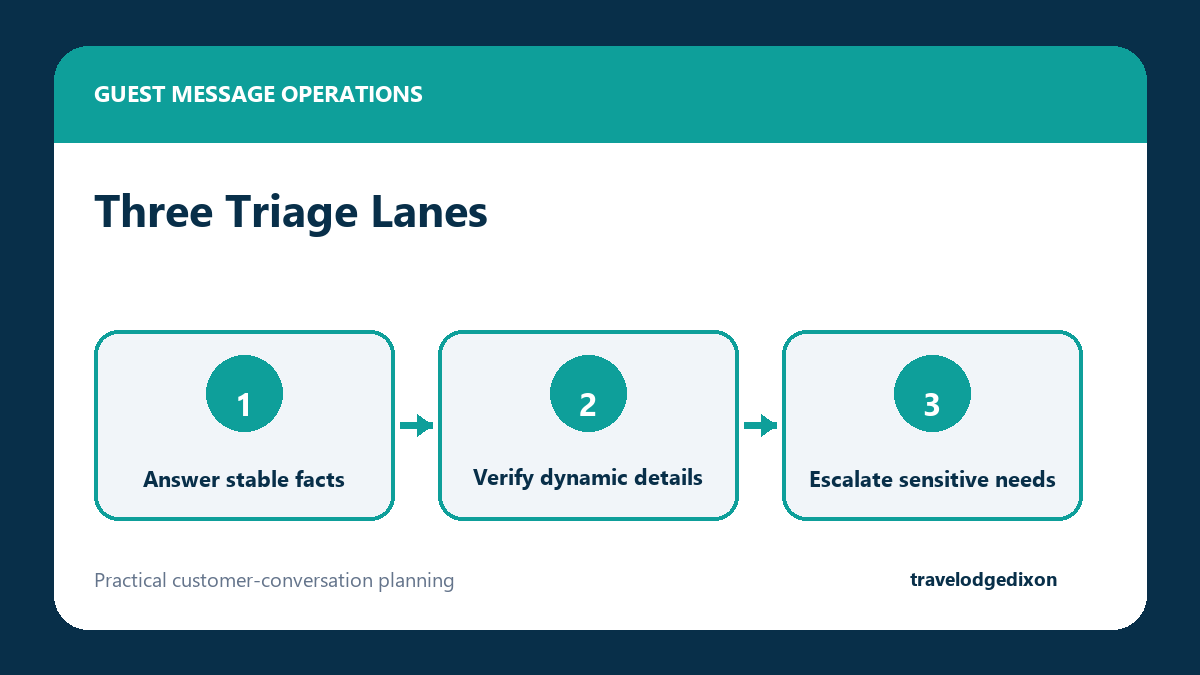
Effective triage requires categorizing incoming messages into three distinct tiers: inquiries that are safe to automate, inquiries requiring light verification, and inquiries that must be handled exclusively by a human. By mapping these categories, front-desk teams reduce their digital workload while maintaining high standards of personalized care.
| Triage Category | Description & Handling Strategy | Examples of Guest Questions |
|---|---|---|
| Safe-to-Automate | Highly stable facts about the property that rarely change. These can be safely answered using standardized, pre-approved responses without staff intervention. | Standard check-in/check-out times, WiFi availability, driving directions, standard pet policies, and basic parking rules. |
| Verify-First | Questions that involve dynamic information. These require checking a system (like a PMS) or verifying a guest’s existing reservation details before confirming. | Specific room availability for upcoming dates, current standard nightly rates, early check-in requests, and reservation confirmations. |
| Human-Only | Complex, sensitive, or subjective inquiries. These must be immediately escalated to the front desk for careful, personalized management and completely kept out of automated workflows. | Billing or refund disputes, specific accessibility or medical accommodations, group block negotiations, and immediate on-property complaints. |
Evaluating Communication Tools and Automation
When evaluating software to assist your front desk with triage, focus on whether it organizes conversations in a way the team can actually use. For instance, you might consider evaluating a bot for Messenger to structure initial pre-arrival interactions. Base the assessment on capabilities you can verify, such as comment and DM capture, BYOK (Bring Your Own Key) AI reply drafts, lead qualification, customer-conversation workflows, and human review controls. Preserve human review before any AI-assisted reply reaches a guest: staff should read and approve each draft for accuracy, tone, and context. For teams that also manage Instagram inquiries, an Instagram chatbot workflow can keep the trigger, useful answer, human owner, and stopping point visible before a guest conversation reaches staff.
Step-by-Step Implementation Sequence
Implementing a Facebook Messenger triage workflow requires phased execution to avoid overwhelming your staff. Follow this systematic approach:
- Audit Past Inquiries: Review the last six months of your Messenger history. Identify frequently asked questions and note where conversations stalled.
- Draft the Knowledge Base: Create an internal document containing exact, approved answers for all “Safe-to-Automate” questions based on current policies.
- Establish the Handoff Protocol: Define exactly how and when a digital conversation transitions to a secure phone call. Create scripted transition phrases.
- Configure the Workflow: If using a third-party inbox tool, set up your customer-conversation workflows and connect your property’s social accounts.
- Train the Front-Desk Staff: Conduct training emphasizing data security. Reinforce the rule against collecting payment, ID, or sensitive accessibility details in chat.
- Test Internally: Have staff members send test messages to the property page to ensure lead qualification flows trigger correctly and notifications are received.
- Launch and Refine: Push the workflow live. Review the system weekly for the first month, adjusting response drafts based on real guest interactions.
Designing a Staff Escalation Checklist
Even the most thoroughly planned triage system will encounter scenarios that require immediate human intervention. Front-desk teams need a clear, unambiguous staff escalation checklist to determine when they must take control of a conversation. Staff should immediately escalate and take over the chat if any of the following occur:
- The guest expresses noticeable frustration, confusion, or severe urgency regarding their upcoming stay.
- The pre-arrival inquiry shifts toward specialized medical needs, complex physical mobility requirements, or specific dietary restrictions.
- The digital conversation involves post-stay billing discrepancies, refund requests, or any form of financial dispute.
- The prospective guest requests specialized group blocks, corporate contract rates, or negotiated long-term stays.
When escalating, the staff member can introduce themselves by first name and explain the next step. If the matter requires information that should not stay in chat, offer the property’s approved phone, booking, or support process. Teams setting a basic first response can also review Meta’s automated greeting instructions; broader page and data practices should be reviewed separately.
Measurement Guidance for Front-Desk Teams
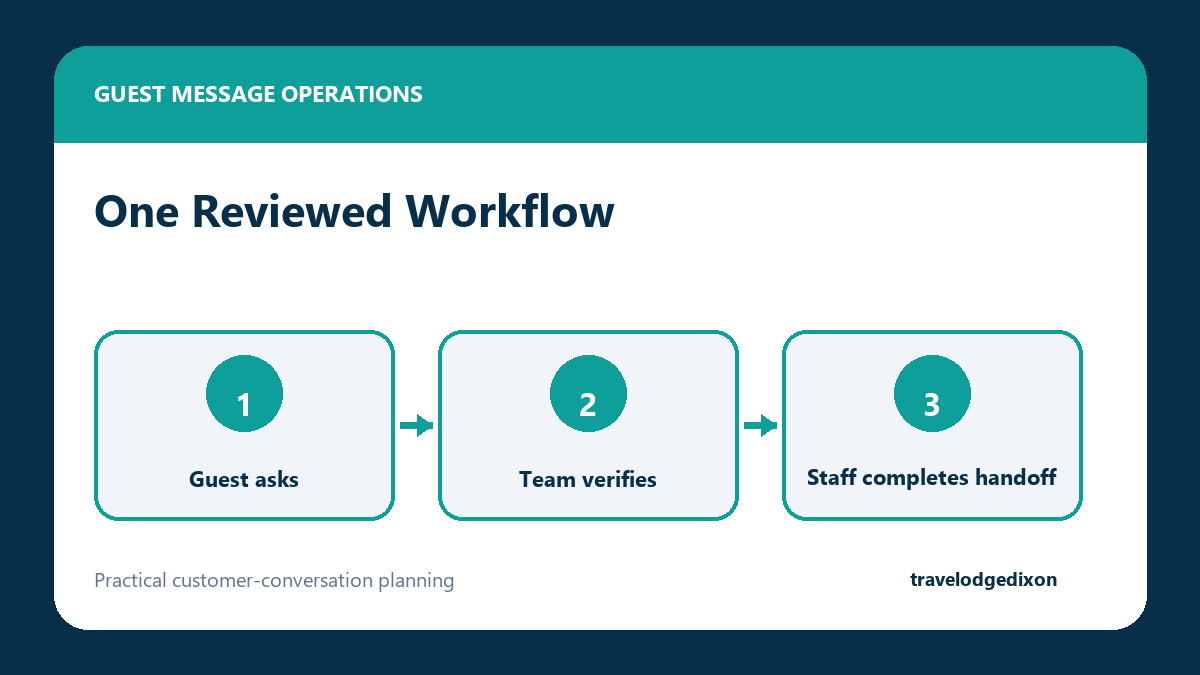
Measure the workflow with observable operating data. Track time to initial acknowledgment, then compare it with repeat-message volume and guest feedback instead of assuming that a faster reply alone creates satisfaction. Monitor the escalation rate and sample conversations to see whether complex needs reach staff while stable questions are answered correctly. An escalation rate of zero deserves review because the rules may be blocking useful handoffs. Finally, track how many inquiries become confirmed direct bookings while recognizing that season, price, availability, and other factors also affect that outcome.
Frequently Asked Questions
How should we respond if a guest types their credit card number directly into the chat?
Do not repeat or copy the number into another message or staff note. Tell the guest that the property does not accept payment information through social chat, then direct them to the property’s approved booking or staff-assisted payment process. Follow the property’s incident and retention policy for any information already received.
Is it appropriate to discuss accessible room features over Facebook Messenger?
You can provide basic, stable facts, such as the dimensions of doorways or the presence of a roll-in shower. However, you should never ask for or collect sensitive details about the guest’s specific health conditions or medical requirements in the chat. Transition these nuanced conversations to a voice call to ensure the guest’s needs are thoroughly and privately understood.
How can we provide detailed property information without sending overwhelming walls of text?
For broad questions about local attractions, comprehensive property rules, or detailed amenity lists, it is best to provide a short, welcoming summary and then link to a dedicated resource on your website. For example, you can seamlessly direct guests to your digital guest information pack for complete, formatted details.
What is the best phrasing to use when moving a conversation offline?
Keep it guest-centric. Use phrasing like: “To ensure we get all the details right for your upcoming stay and to protect your privacy, I’d love to speak with you directly. Please call our front desk at [Phone Number] and ask for [Staff Name].”
Final Next-Step Checklist
To bring this triage workflow to life at your small lodging property, complete the following seven actions over the next two weeks:
- Audit your property’s Facebook Messenger history to identify your top five most common guest questions.
- Write clear, concise, and friendly standard answers for these top five stable questions.
- Establish a strict, written property policy forbidding the collection of payment, ID, or sensitive health data via social media.
- Evaluate potential communication platforms specifically for comment and DM capture capabilities, ensuring they support BYOK AI reply drafts and robust human review controls.
- Create a step-by-step escalation guide specifically tailored for your current front-desk staff.
- Role-play complex chat scenarios with your team, focusing heavily on how to securely transition a chat conversation to a phone call.
- Schedule a 30-day review meeting after launch to adjust your responses and refine your customer-conversation workflows based on actual guest feedback.



0 Comments